Stratoforce (in development)
Solo Developer & Game Designer
Release date:
T.b.d.
Development time:
Solo, 1 month part-time (and counting)
Project type:
Passion project
T.b.d.
Development time:
Solo, 1 month part-time (and counting)
Project type:
Passion project
Description
I've always had a love for aerial combat games, especially those in the Battlefield and Ace Combat series. They're designed so differently from conventional gameplay, a lot of which stems from the inherent "whoa, I'm flying!" fun factor. I'm currently writing the narrative to the game, while prototyping combat mechanics and interactions.Tooling
Debug Graph Tool
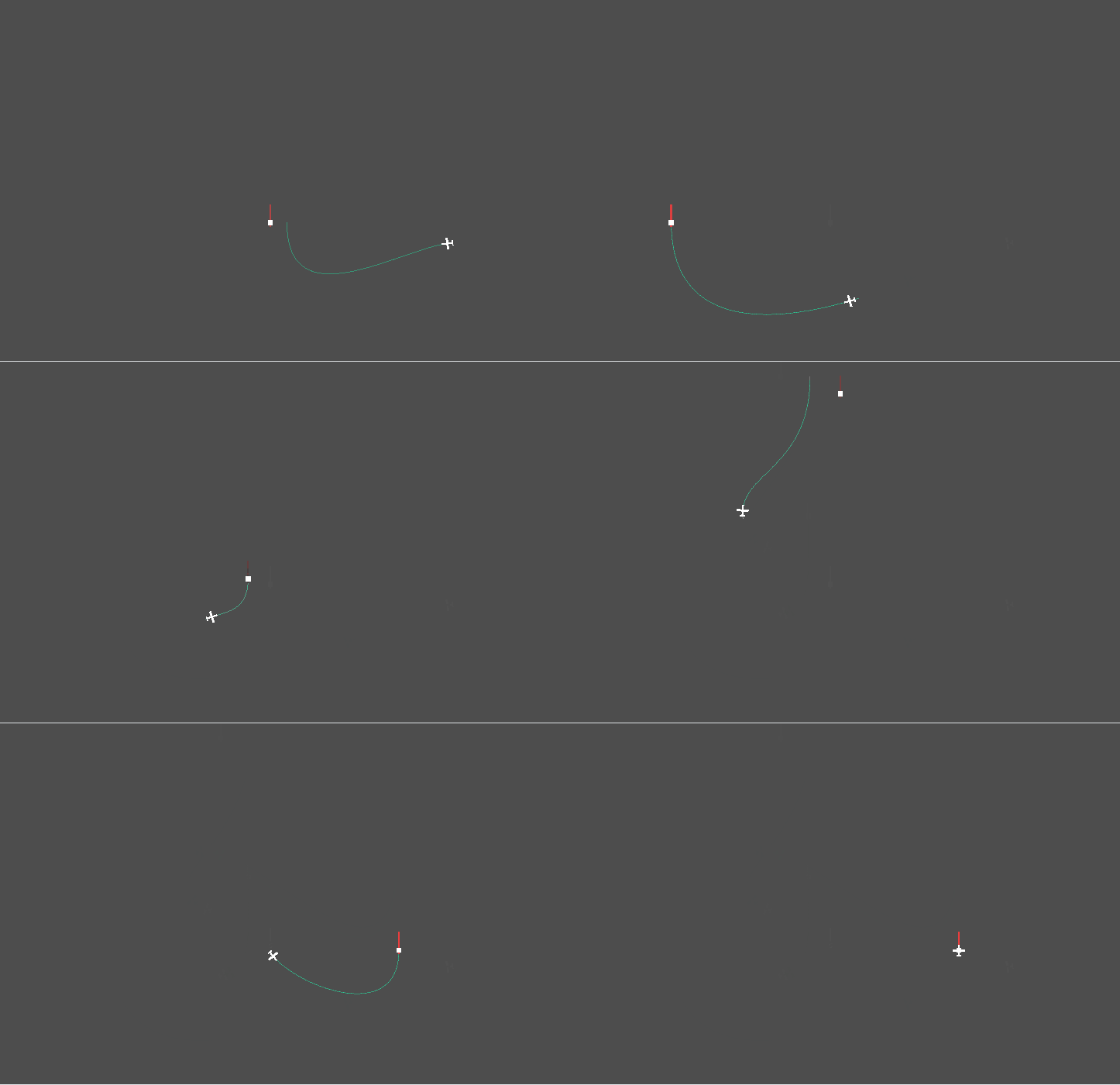
I wanted a way to visualize the relation between linear velocity and angular velocity. Because this is difficult with plain debug prints, I wrote a custom Godot add-on that plots data in a graph. This immediately helped me identify issues with sudden velocity jumps.It integrates perfectly into the Godot editor, where it sits docked by default. After positive feedback online, I packaged it and published it on the Godot Asset Store!
Enemy behaviour
Combat pillars
I take a few important pillars into account while designing enemy behaviour. They are based on target players' preferences and those of my own.- Intimacy
The game focuses on one-on-one combat. The player chooses which target to tackle, and is free to switch between targets. Enemies never gang up on the player, even if there are a lot of them in the level. - Same rules
The player should feel like they are outmaneuvering enemies on similar terms, that is, a similar turn radius, similar speeds, similar physics. - Always readable
The player should always know where all enemies are and which direction they’re heading, through a combination of their visible model, contrails/smoke trails, UI.
Unique pathfinding challenges
In most games, pathinding simply means getting from point A to point B. But I want to be able to direct airplanes to a position, facing a certain direction. I tried two approaches: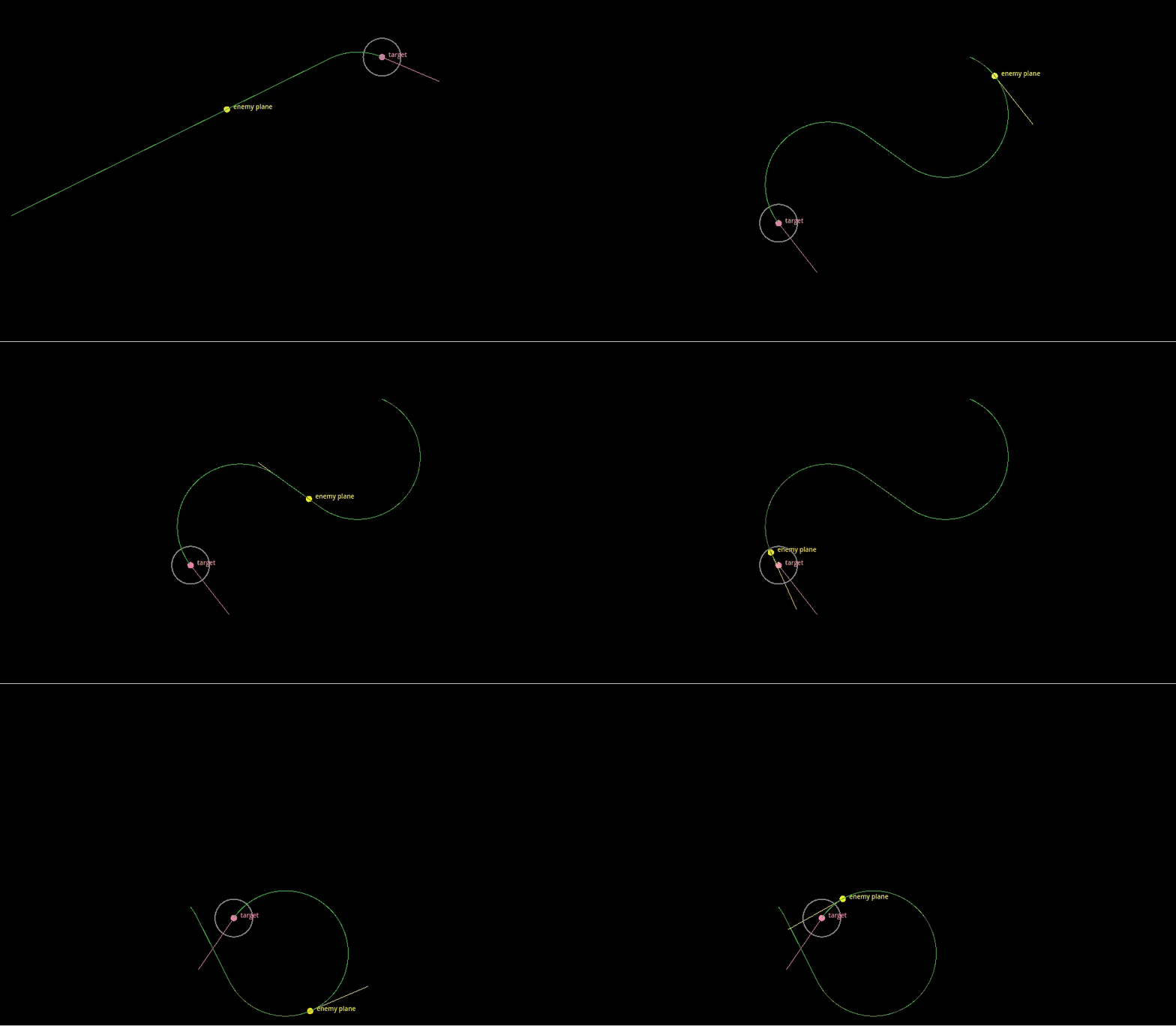
Distance & speed problem
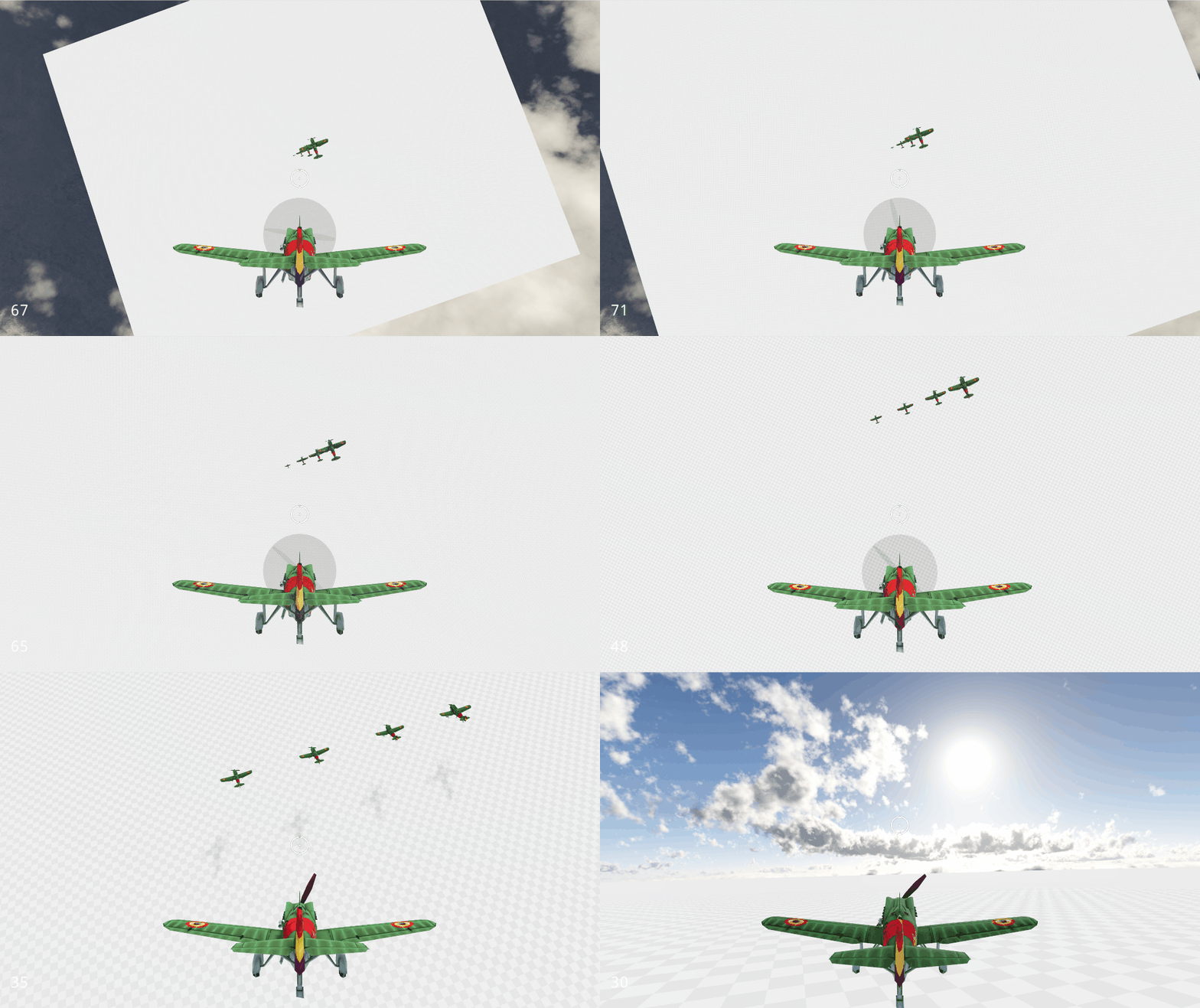
In Stratoforce, the player has to get quite close to an enemy to take it out. While testing I identified a dilemma:- If the player & enemies move slowly, all action is concentrated in a smaller area so there is less waiting and much more to see on-screen, but movement feels sluggish. (Battlefield 1)
- If the player & enemies move fast, it makes movement much more visceral, but the player will have a very small window of attack before overshooting the enemy, and they are fighting far away dots most of the time. (Ace Combat)
- A mix of the two results in worst of both worlds.
Possible solutions
Right now I'm in the process of prototyping multiple solutions. So far I've tried:- Perspective negation by scaling up distant enemies
- Screen space wind VFX to feel faster
Right now everything is coming together nicely, and I'm on track to perform the first playtests very soon. Exciting!